
Biden admin will spend $1.6B to expand Covid-19 testing and sequencing
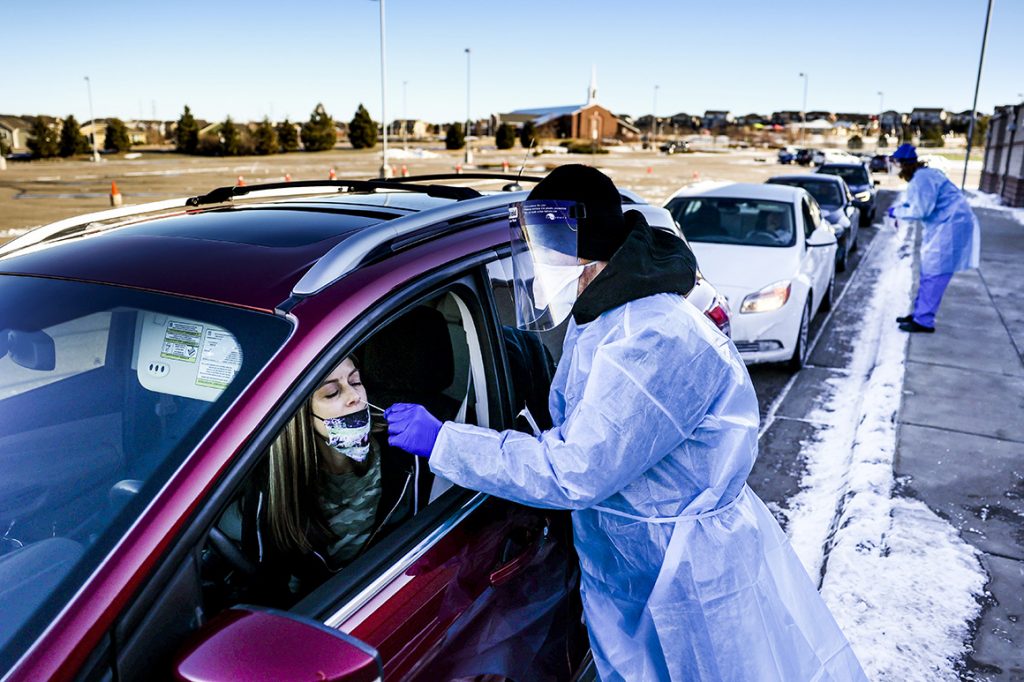
COVID Check Colorado site tester Bradford Christopher administers a Covid-19 test on Dec. 30, 2020 in Parker, Colo. | Michael Ciaglo/Getty Images The White House announced Wednesday …
Fauci: 'Non-workable' to vaccinate teachers before schools open
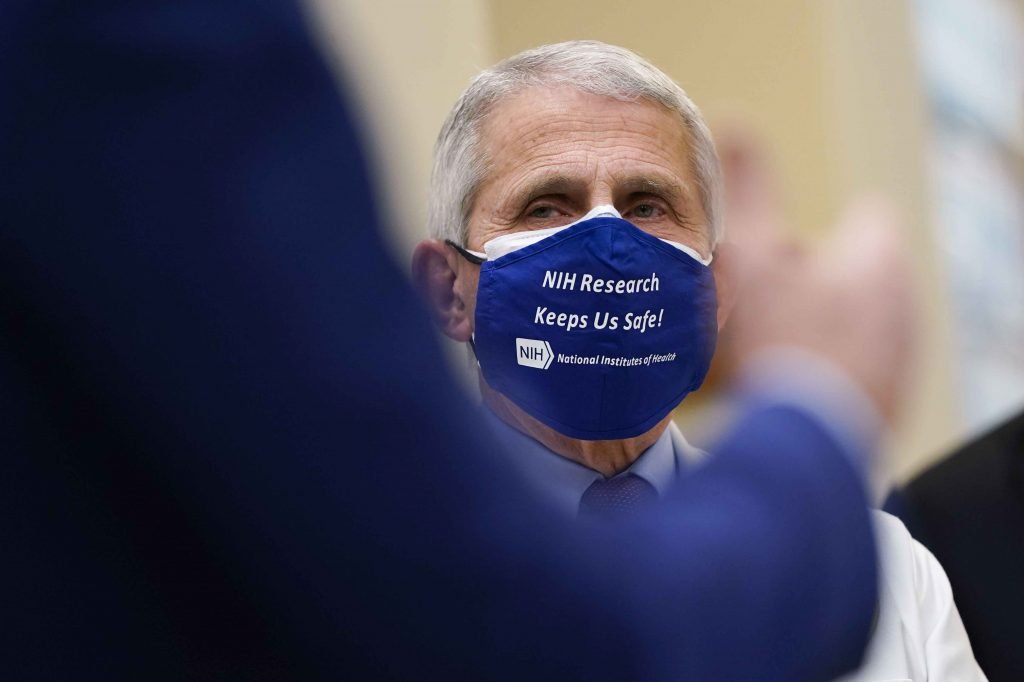
Anthony Fauci listens as President Joe Biden speaks during a visit at the National Institutes of Health. | AP Photo/Evan Vucci Anthony Fauci said Wednesday that vaccinating …
EU OKs contract for 300 million more Moderna vaccine doses
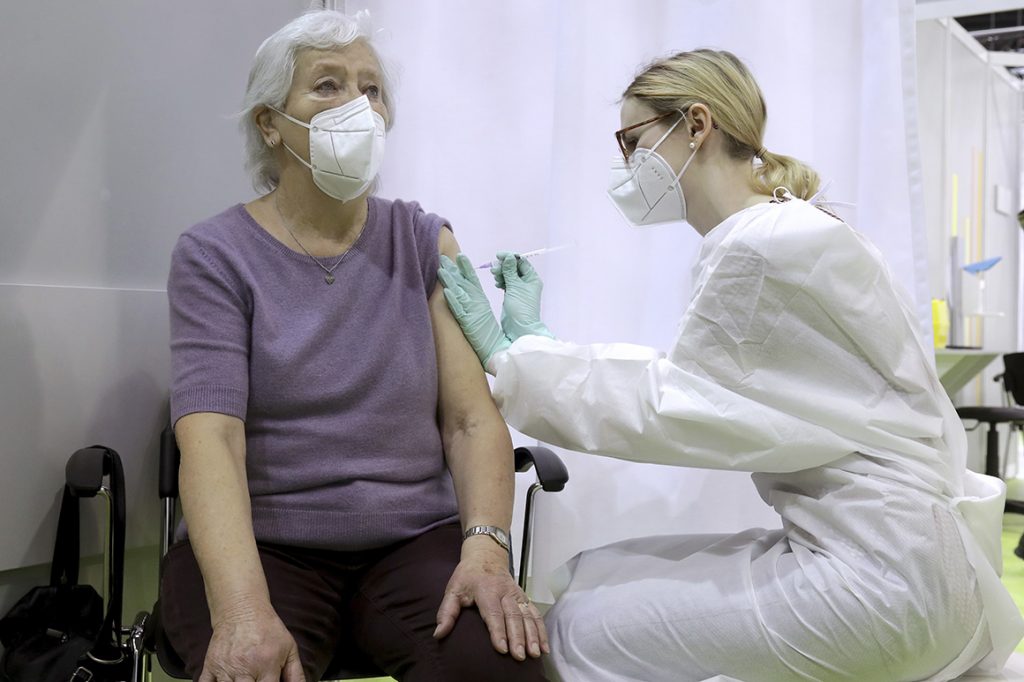
Renate Schulz receives a Moderna Covid-19 vaccination by doctor Laura Tosberg in Berlin, Germany. | Michael Sohn/AP Photo By ASSOCIATED PRESS 02/17/2021 08:07 AM EST …
Biden admin rushes to close virus-sequencing gap as variants spread
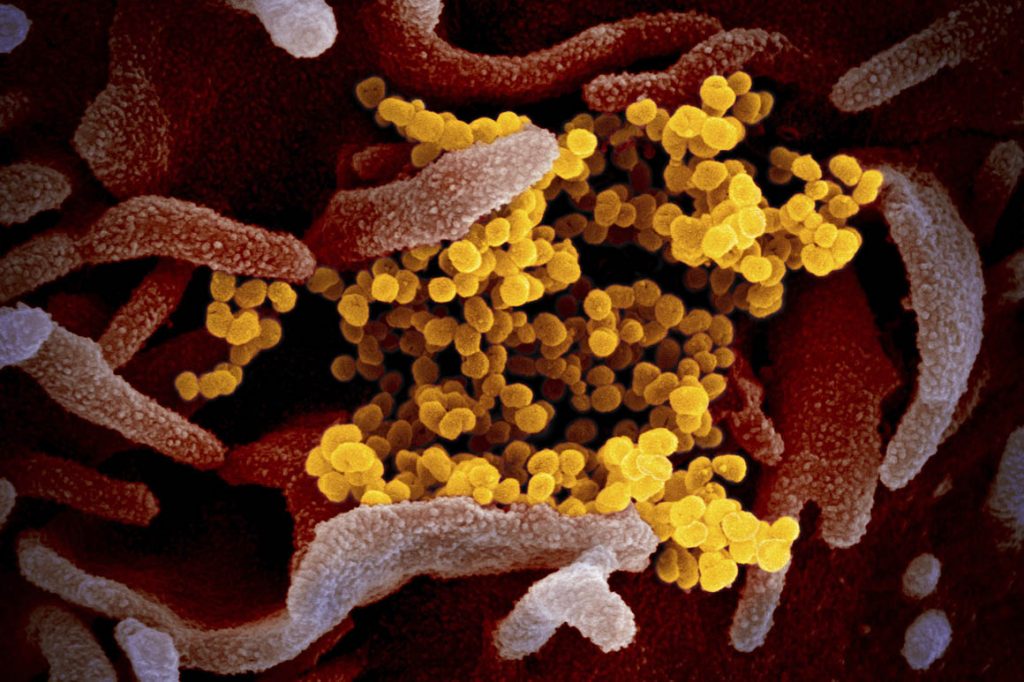
The Centers for Disease Control and Prevention is in discussions with at least 13 labs to expand its efforts to sequence the genomes of coronavirus samples as the U.S. …
NHS Digital rolls out e-notifications to GPs of urgent medicine supplies
Move aimed to improve information sharing between GP practices and community pharmacies
White House bids for 'surprise' billing fix ahead of next rescue package
The White House is renewing a push to end “surprise” medical bills — possibly as part of the next coronavirus rescue package — in a bid to deliver on protecting insured patients from sometimes staggering costs of emergency or out-of-network care.
Trump administration officials are floating a plan that would outlaw health care providers from putting patients on the hook for thousands of dollars in expenses — but without mandating how doctors and hospitals would recover their costs from insurers, according to administration officials, Capitol Hill aides and industry lobbyists familiar with discussions. Billing disputes would have to be worked out on a case-by-case basis.
Advertisement
Surprise billing was supposed to be last year’s easy health policy fix. Industry lobbyists, consumer advocates and lawmakers all agreed insured patients shouldn’t receive high bills when they’re taken to the emergency room or inadvertently treated out of network.
But the issue became the object of months of fierce lobbying and rivalries between congressional health committees, though the matter has receded during the pandemic. Congress agreed to cover the cost of Covid-19 testing in an earlier rescue package, and the Trump administration blocked providers that accept any part of a $175 billion industry bailout fund from sending unexpected bills to coronavirus patients.
House Speaker Nancy Pelosi included that prohibition in the lower chamber’s latest rescue proposal. Administration officials now want to pass a blanket prohibition on all hospitals and physicians and deliver a pocketbook health issue for President Donald Trump to tout on the campaign trail.
A White House representative wouldn’t comment on the proposal.
So-called balance billing can hit insured patients with staggering unanticipated medical bills if they inadvertently get treated at an out-of-network facility, such as in an emergency situation. Even people who go to an in-network facility may later discover one of the physicians wasn’t part of the network.
But despite mounting public concern and a flurry of legislative activity, Congress over the past year couldn’t resolve a standoff involving hospitals, physicians, employers and insurers that mired bipartisan proposals and pitted powerful health committees against each other. Efforts to help hospitals and physicians during the pandemic have left the outlook murky.
The prospect of the White House plan raising health care costs could yet douse enthusiasm on Capitol Hill. Though congressional scorekeepers haven’t issued a formal estimate, a congressional aide said the Congressional Budget Office has advised through informal guidance that the plan would raise premiums by driving up provider rates.
“As far as protecting Covid patients from being surprise billed, we’re kind of thinking, if this is all that can happen, we want this issue taken care of,” said one insurance lobbyist who requested anonymity to discuss industry deliberations. “But we have major concerns about impact on costs and patients if the entire issue isn’t addressed in a more comprehensive way.”
Sen. Patty Murray of Washington, the top Democrat on the Senate HELP Committee who developed surprise billing legislation with Chairman Lamar Alexander (R-Tenn.) last year, signaled cost concerns could scuttle the latest White House bid.
“Senator Murray has been clear throughout negotiations on surprise billing that any solution needs to prioritize patients — in particular by making sure costs aren’t passed onto them in the form of higher premiums or out-of-pocket costs,” said an aide to Murray. “She doesn’t believe this proposal meets that principle, and is concerned it would increase patients’ costs.”
A straight-up ban on surprise billing falls in line with a solution the American Hospital Association, Washington’s biggest hospital lobby, has pushed in the past. The trade group declined to discuss whether it would support including it in the next coronavirus relief package.
Powerful doctors groups have been wary of a policy that only bans the practice and doesn’t include a way to resolve payment disputes. The American Medical Association contends the approach would leave health insurers with too much leverage.
“With physicians working on the front lines of this public health crisis and desperately trying to keep their doors open, Congress is unlikely to find a rationale for strengthening the hand of insurers,” said AMA President Patrice Harris in a statement to POLITICO. “As there is no balance billing for Covid testing and treatment under most types of insurance, there is no need to rush these significant policy changes as part of the next Covid relief package.”
POLITICO Pulse
Get the latest on the health care fight, every weekday morning — in your inbox.
Meanwhile, insurers and employers say that without a formula to resolve payment disputes, they could face costly litigation if hospitals or doctors want higher rates. Their fear is a patchwork of possibly conflicting formulas judges could impose to decide payouts, or that a decision that sides with doctors or hospitals could make high rates the precedent.
“We do want our employees to be protected,” said a lobbyist for an employer group, who also spoke on condition of anonymity. “But with no payment mechanism, it is possible this could give rise to lawsuits, and you could end up with different rules in different jurisdictions.
Still, health care experts and economists think the administration plan could erase huge financial uncertainties for patients without driving up health care costs.
“I view the simple ban on balance billing as pretty close to an ideal solution,” said Loren Adler, associate director of the USC-Brookings Schaeffer Initiative for Health Policy, who has advised Congress on its various proposals.
Adler thinks the blanket ban may keep health prices and insurance premiums in check and said the limited data suggests that the policy would lower premiums more than past proposals in Congress.
Even if the policy triggers more litigation, with doctors suing insurers or employers for higher rates, some experts predict courts could be skeptical about ruling for excessive charges.
“I think increasingly courts are getting it right, and maybe that’s because surprise billing is now part of our lexicon,” said Duke University law professor Barak Richman.
What are Delphi studies?
Introduction
Whenever developing training competencies, tools to support clinical practice or a response to a professional issue, seeking the opinion of experts is a common approach. By working to identify a consensus position, researchers can report findings on a specific question (or set of questions) that are based on the knowledge and experience of experts in their field.
However, there are challenges to this approach. For example, what should be done when consensus cannot be reached? How can experts be engaged in a way that allows them to consider objectively the views of others and—where appropriate—change their own opinions in response? One approach that attempts to provide a clear method for gathering expert opinion is the Delphi technique.
The Delphi technique was first developed in the 1950s by Norman Dalkey and Olaf Helmer in an attempt to gain reliable expert consensus. Specifically, they developed an approach—named after the Ancient Greek Oracle of Delphi, who could predict the future—which promoted anonymity and avoided direct confrontation between experts, so that the methods employed “…appear to be more conducive to independent thought on the part of the experts and to aid them in the gradual formation of a considered opinion”.1 Though the original Delphi study was linked to the defence industry, the technique has spread to other research areas, including nursing.2
Characteristics of Delphi studies
As with all research methods, the Delphi technique has evolved since it was first reported on in the 1960s. However, many of the fundamental characteristics of the approach still remain from Dalkey and Helmer’s original outline. First, the overarching approach is based on a …
Privacy risks of contact-tracing app exist ‘in theory’, cyber expert says
Privacy risks associated with the NHS contact-tracing app exist “in theory” but would require more data to be considered a threat, the technical director of the National Cyber Security Centre has said.
Dr Ian Levy acknowledged there’s a reidentification risk with tracing technologies “where it’s sometimes possible to reidentify some small number of people from an anonymised large scale contact graph or other data set” but that NHS app doesn’t collect enough data to enable that.
“It would take changes to the app and also bringing lots of other data together to do this, which the NHS does not allow,” he wrote in a blog post.
Using Bluetooth, the app works continuously in the background of a person’s phone, storing anonymised identifiers collected from other devices a user comes into contact with. That information is storied within the app until a person develops potential Covid-19 symptoms.
Only then will a user have the option to send data collected by the app to a central NHS database, which will then use an algorithm to identify other users who have been in close enough proximity to be deemed at risk.
It was launched in the Isle of Wight on 5 May, with a wider roll-out across the UK expected in the coming weeks.
“Of course, at some point, you have to be identified to the NHS, for example to get a clinical test,” Dr Levy adds.
“If that happens through the app, the system uses a privacy preserving gateway to be able to link a test to an app Installation ID anonymously, but not the Installation ID to a person’s identity or NHS record. Of course, someone who has access to all three systems can link you, but by design no-one does.”
There’s a set of “well known attacks” that all apps have to mitigate, he states, but “the NHSX system as a whole does a good job of balancing the individual privacy needs with the public health needs”.
More on Covid-19 contact tracing apps
‘Please install the app’
Despite concerns about privacy and data, Dr Levy urged the public to download the app to help the NHS tackle Covid-19.
Epidemiologists say 60% of the population would need to use the app for it to be successful – an ambitious target given low uptake levels in other parts of the world.
In Singapore about 20% of the population use a similar app to trace the virus, and in Australia only 3.5 million people downloaded the countries contact-tracing app in the first five days of its release, representing about 14% of the population.
The app is a small but “important and visible” part of the response to the Covid-19 pandemic, Levy said.
“An app that provides fantastic provable privacy but doesn’t help stop the spread of the disease isn’t a useful tool. The NHSX team developing this app is diverse, multi-disciplined, science and evidence led and working flat out to build a product that protects the public,” he wrote.
“As our understanding of the virus evolves, so will our response, including how the app works. It may turn out that one of the other models proposed actually helps manage the virus better.
“No-one knows today, but the UK is responding based on the best scientific advice available today. If that advice means the app has to change, we’ll evolve the design. But the NHS will always be transparent about what the app does and how.”
NHS Digital creates knowledge panels for health info
Syndication exercise releases content for details of 251 common conditions
Pence: Coronavirus testing capacity to dramatically increase
Vice President Mike Pence. | Mark Wilson/Getty Images
Vice President Mike Pence announced Sunday the mass release of testing kits for the novel coronavirus and said the administration would have enough to test thousands of patients.
Speaking with CNN’s Jake Tapper on “State of the Union,“ Pence acknowledged the United States has lagged behind other countries in the manufacturing and distribution of coronavirus testing kits. Pence, whom President Donald Trump appointed to lead the administration’s coronavirus efforts, added that several governors had raised the issue with him and that it was a “fair question.”
Advertisement
“We’re addressing it; we’re leaning into it,” Pence said. “And, more importantly, we’ve established a process in a number of cities across the country where if somebody presents at the local hospital with a respiratory ailment, we want them also tested for coronavirus.”
Pence initially claimed there were 15,000 testing kits released over the weekend with plans to send out an additional 50,000. But the Association of Public Health Laboratories told POLITICO it understands there will be enough kits to test 75,000 patients by the end of the week — not tens of thousands of coronavirus kits as Pence suggested Sunday. The Centers for Disease Control and Prevention previously said each diagnostic kit can test 700-800 patient samples.
Scott Becker , APHL executive director, added the production pipeline of test kits should continue to ramp up.
Health and Human Services Secretary Alex Azar also clarified Sunday that the administration will have the ability to test about 75,000 people.
Pence’s remarks came shortly after the first reported death from coronavirus in the United States, which occurred in Washington state on Saturday. It was a rare acknowledgment of the challenges of combating the disease from the administration, which is led by a president who has tried to downplay the risk of the virus. Trump has frequently said his administration was the best equipped in the world to tackle an outbreak.
Pence has also tried not to be too alarmist over the outbreak, saying Sunday the risk remains low. Still, he also said the president would probably be OK with closing schools and other disruptive actions by local officials to keep the virus from spreading.